In today’s fast-paced gaming, military, and action-packed content, you might have stumbled across terms like “CQB” or noticed intense phrases like close-range combat and wondered what they really mean.
Understanding this concept is not only for gamers or soldiers—it’s a phrase that’s popping up in movies, strategy guides, and even everyday discussions about conflict and personal space.
Whether you’ve seen it in your favorite FPS game, an action thriller, or heard someone mention it in a tactical scenario, knowing what it truly entails can give you a new appreciation for strategy, precision, and quick thinking.
Quick Answer
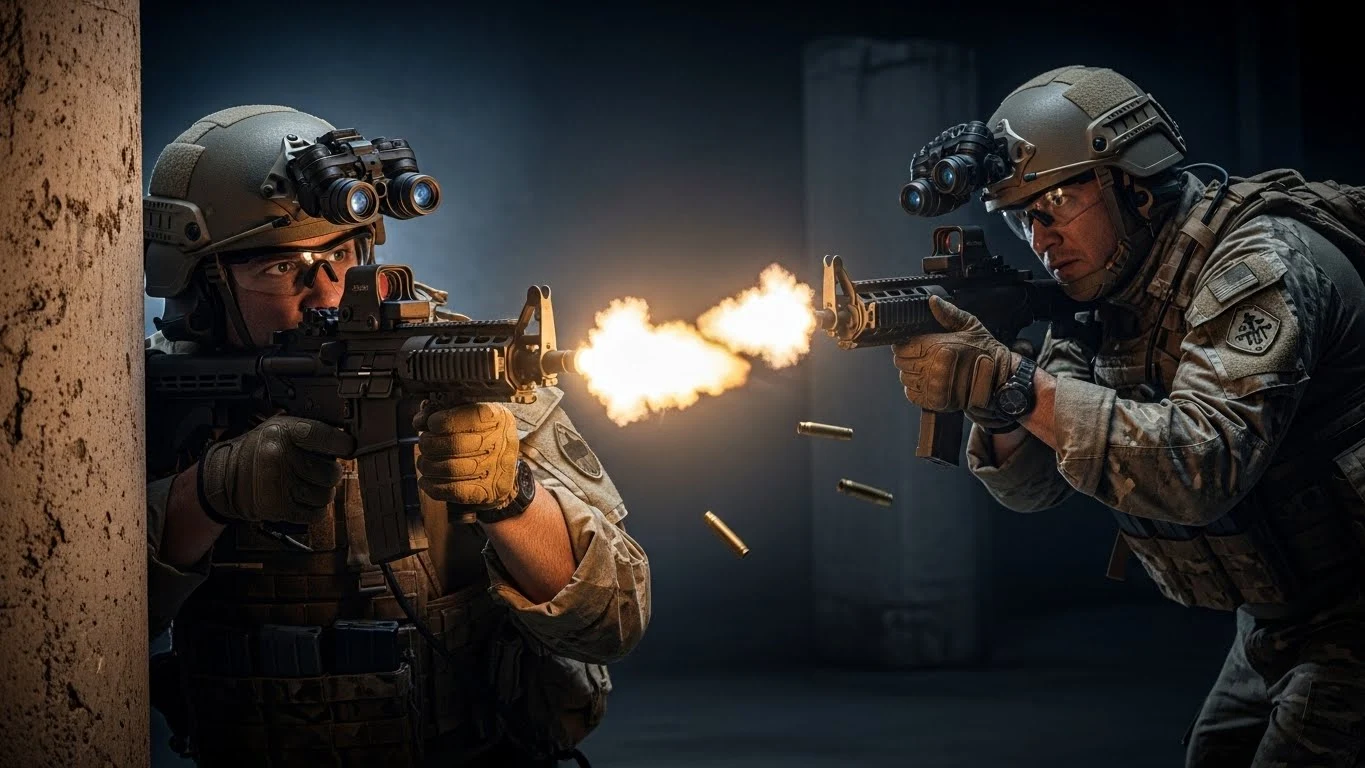
Close quarter battle refers to combat or confrontation that happens at very short distances, typically inside buildings, narrow streets, or confined areas. Unlike open-field combat where space allows for long-range tactics, this type of battle requires fast reflexes, sharp decision-making, and often a combination of firearms, hand-to-hand skills, and environmental awareness.
What Is Close Quarter Combat (CQC)?
In simple terms, CQC is any fight where opponents are extremely close to each other.
- It’s intense and high-stakes because there’s very little room for error.
- It’s fast-paced: split-second decisions can determine the outcome.
- It’s highly tactical: knowing your environment is as important as knowing your opponent.
Example: Think of a game like Call of Duty when players storm a house. Every corner could hide an enemy. Every doorway is a potential risk. This is the essence of close-range confrontation.
Historical Background
Close-quarter confrontations aren’t a new concept—they’ve been around since humans first fought in tight spaces:
- Medieval times: Knights in castle corridors or during castle sieges had to fight enemies within walls.
- World Wars: Urban warfare forced soldiers into close combat inside buildings and trenches.
- Modern special forces: Elite units train extensively for confined spaces where long-range weapons are impractical.
Essentially, whenever fighters are restricted by space, tactics shift from distance-based strategy to rapid, precise, and often aggressive action.
Key Features of Close-Range Combat
Understanding what makes this type of battle unique helps you see why it’s so intense. Some main features include:
- Proximity: Opponents are within arm’s reach or just a few meters away.
- Speed: Quick reaction times are crucial.
- Weapon versatility: Firearms, knives, batons, and even fists can be used.
- Environment-focused tactics: Walls, furniture, or obstacles can be used as shields or traps.
- High tension: Decisions must be made instantly—hesitation can be fatal.
Why It’s Popular in Gaming
For Gen-Z gamers and streaming culture, close-range encounters are extremely popular. Here’s why:
- Adrenaline rush: Fast-paced action keeps players on edge.
- Skill-based: Reflexes and strategy matter more than just the weapons.
- Social content: Epic close-range battles make great clips for TikTok or YouTube Shorts.
- Variety in gameplay: Switching between open areas and confined spaces keeps games dynamic.
Example Scenario: In a popular battle royale game, you might rush into a house with your team. Every room is a gamble. Do you rush first? Clear rooms systematically? Use grenades? Each decision can make or break your match.
Everyday Applications Beyond Gaming
Surprisingly, understanding confined space strategy isn’t just for gamers or soldiers. It applies in several modern contexts:
- Self-defense: Knowing how to react when someone invades your personal space can be life-saving.
- Law enforcement: Police and security personnel train extensively for tight-space confrontations.
- Teamwork in crises: Whether it’s a fire evacuation or rescue operation, planning movement in confined spaces requires CQB-like thinking.
Even understanding body positioning, awareness, and quick decision-making can make a huge difference in personal safety.
Tips for Handling Close-Range Situations
Whether you’re a gamer, athlete, or just curious, these tips apply:
- Know your surroundings: Every obstacle can be an advantage or a threat.
- Stay calm: Panicking leads to mistakes.
- Move smartly: Avoid predictable patterns. Use cover and angles effectively.
- Prioritize awareness over aggression: Sometimes avoiding direct confrontation is better.
- Train reflexes: Quick reactions are your best defense in close quarters.
Common Misunderstandings
Many people think “close combat” is the same as a fistfight or just small-scale fighting. That’s not entirely true:
- It’s not just physical fighting. Weapons, tools, and environmental tactics play a huge role.
- It’s not chaotic without rules. Training and strategy are essential, especially for military and law enforcement.
- It’s not always violent. In games or simulations, it can be a safe way to practice reaction and strategy skills.
Understanding the nuance is key—this type of battle is as much about mindset and planning as it is about raw strength.
How to Recognize Close-Range Conflict
Sometimes, you can spot situations where a close-range strategy is required:
- Confined spaces: Hallways, rooms, alleys.
- Sudden encounters: When an opponent or challenge appears unexpectedly nearby.
- Limited options: When you can’t retreat or maintain distance.
- High-stakes moments: Every action has immediate consequences.
Even in games or simulations, recognizing these moments can give you a competitive edge.
Tools and Weapons Used
Depending on the context, the tools for close-range confrontations vary:
- Firearms: Shotguns and pistols are preferred due to short-range efficiency.
- Blunt objects: Batons or improvised items.
- Sharp weapons: Knives or tactical blades.
- Hands and body: Martial arts and hand-to-hand combat remain effective.
- Technology: Drones or sensors in modern combat scenarios can assist without direct contact.
Fun Pop Culture References
CQB and close-range combat often appear in movies, shows, and games:
- Movies: John Wick series, The Raid, Extraction.
- Games: Rainbow Six Siege, Call of Duty, PUBG, Fortnite.
- Anime: Attack on Titan uses indoor close-range strategies frequently.
- TV Shows: Police procedural dramas often showcase tight hallway takedowns or room-to-room tactics.
This widespread presence has made the concept trendy and relatable for younger audiences.
Key Takeaways
- Fast-paced and high-stakes: Every second counts.
- Tactical advantage matters: Awareness and environment are crucial.
- Versatile applications: From gaming to real-life self-defense.
- Strategy over chaos: It’s about skill, not just brute force.
By understanding these principles, you’re not just learning a term—you’re unlocking a mindset that’s practical, strategic, and relevant in many areas of life.
Final Thoughts
Understanding close-range combat is not just about knowing the term. It’s about strategy, speed, awareness, and decision-making in high-pressure environments.
Whether you encounter it in games, movies, or real-life tactical scenarios, knowing the principles behind it—movement, reflexes, and environmental mastery—can make all the difference.
So next time you see someone storming a building in a video game, or hear a discussion about tactical scenarios, you’ll know exactly why split-second decisions and tight-space strategy are the real game-changers.