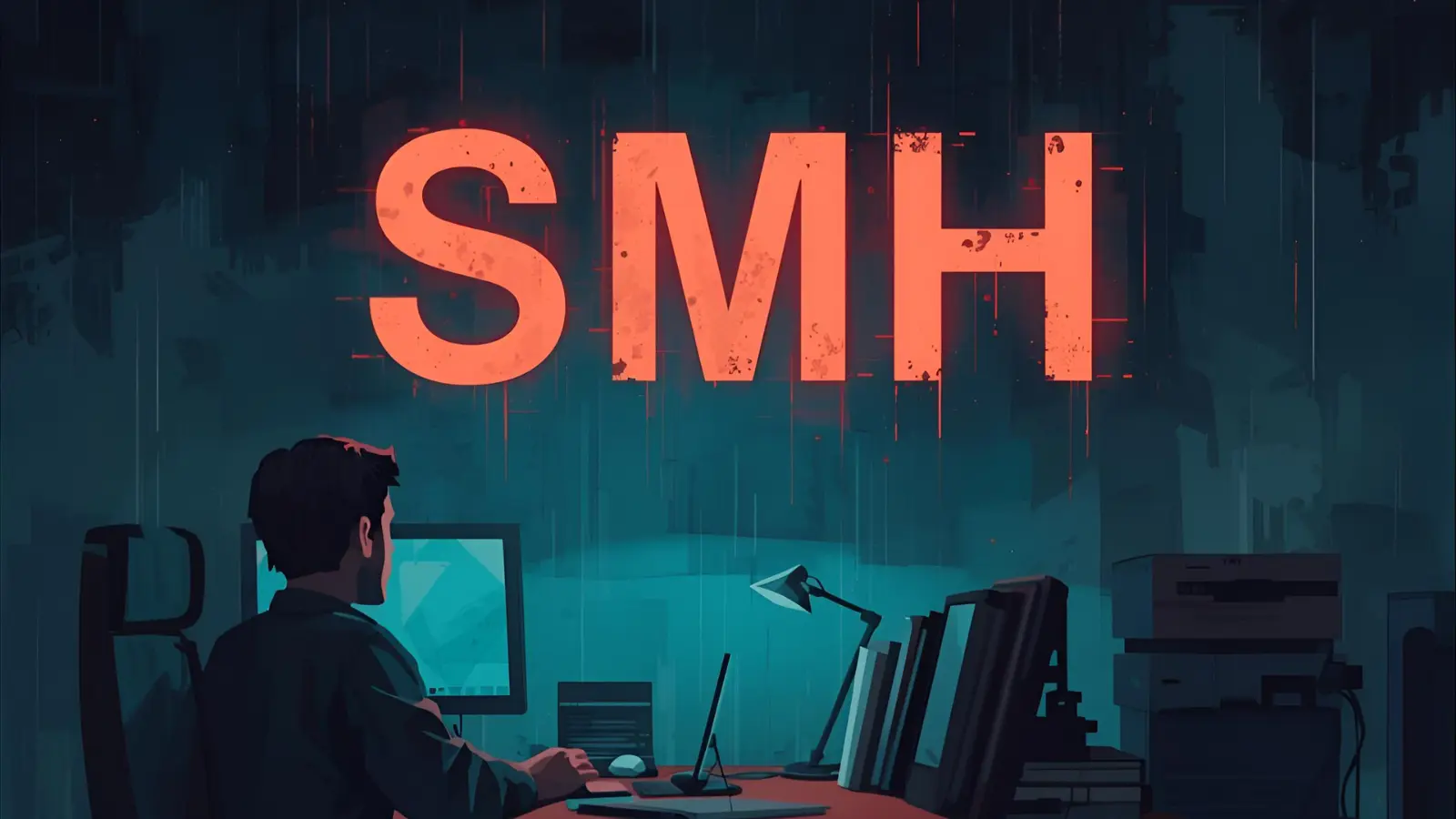
If you spend any time online whether on TikTok, Snapchat, Instagram, or even in comment sections you’ve probably come across those three letters that everyone seems to type when they’re annoyed, disappointed, or just done with the internet.
Yup, we’re talking about SMH. It pops up in memes, DMs, texts, and reaction posts, yet many people still have no idea what it’s supposed to stand for or why everyone uses it the way they do.
Even though SMH looks simple, the vibe behind it hits differently depending on the mood, tone, and conversation.
That’s exactly why this guide breaks everything down in the clearest, most human way so you fully get the meaning, the vibe, the emotional tone, and all the situations where people use it.
Let’s decode it like a Gen-Z pro.
🔍 Quick Answer
SMH means “shaking my head.”
It’s used online and in texts to express disappointment, disbelief, annoyance, frustration, or a silent reaction when words aren’t enough.
What Does SMH Actually Express?
SMH isn’t just about physically shaking your head. It’s about everything that action represents. A facepalm. A sigh. A silent judgment. A “why would you even do that?” moment.
SMH expresses:
- Frustration — When someone says or does something ridiculous.
- Disbelief — When a situation is so wild you can’t even respond.
- Annoyance — When you’re just tired of explaining the obvious.
- Mild judgment — Friendly or sarcastic, depending on context.
- Disappointment — When expectations flop dramatically.
It’s basically a one-word emotional reaction that says, “No comment, but also… seriously?”
Why SMH Became So Popular
SMH is short, expressive, and perfect for fast-paced digital communication. It fits the internet era where:
- People type more than they talk
- Texting needs quick emotion
- Social media trends shape how we speak
- Short reactions beat long paragraphs
Gen Z loves it especially because it feels like a reaction meme in text form—instant emotion, no explanation needed.
How to Use SMH in Real Conversations
SMH is super flexible. It works in jokes, roasts, emotional reactions, and even daily conversations. Here’s the breakdown:
1. When Someone Does Something Dumb
Example:
Friend: “I stayed up all night and forgot to do my homework.”
You: “SMH, you had one job.”
2. When Something is Too Cringe
Example:
“He texted her 34 times after she left him on read.”
You: “SMH this is embarrassing.”
3. When You’re Too Tired to Explain
Example:
“Wait… so water is wet??”
You: “Bro… SMH.”
4. When You’re Jokingly Judging a Friend
Example:
Friend buys the same hoodie for the 12th time.
You: “SMH you’re addicted.”
5. When People Don’t Make Sense
Example:
“Why is the WiFi not working? Oh wait, I unplugged it.”
You: “SMH.”
Variations and Spinoffs of SMH
Language evolves every day online, so of course there are upgraded versions of SMH.
🔥 Popular Variations:
- SMFH — Shaking my freaking head (stronger emotion)
- SMH in disbelief — Used in long comments
- I’m literally SMH rn — For extra Gen-Z dramatics
- Smh my head — The meme version that makes fun of SMH
These versions all carry the same core meaning but add personality depending on how dramatic you want to be.
SMH vs. Other Online Reactions
The internet is filled with short expressions, but each one hits differently.
SMH vs. Facepalm
Facepalm = embarrassment
SMH = more disappointment or judgment
SMH vs. LOL
LOL = humor or amusement
SMH = annoyance or disbelief
SMH vs. Sigh
Sigh feels sad or tired
SMH feels more like “I give up on you.”
SMH vs. Bruh
Bruh = confusion or shock
SMH = tired disappointment
SMH in Texting and Social Media
Different platforms give SMH slightly different energies.
On TikTok
Used in captions or comments for funny fails, cringe moments, or anything “you had to see to understand.”
Examples:
- “SMH he really tried to do a backflip in the kitchen.”
- “SMH some people shouldn’t be allowed near microphones.”
On Instagram
Used with memes, reels, and story reactions.
Examples:
- “SMH the way Monday hits every week.”
- “SMH why is this filter exposing me like this?”
On Snapchat
Used casually in streak convos, photo captions, and daily chat.
Examples:
- “SMH this is why I don’t wake up on time.”
- “SMH my hair won’t listen today.”
On Twitter/X
Used in threads to react to trending chaos, politics, celebrity drama, and relatable struggles.
Examples:
- “SMH they said summer body but my snacks said no.”
- “SMH every time I trust the weather app.”
Emotional Tones Behind SMH
Depending on the situation, SMH can express different feelings. Here’s what each tone looks like:
1. The “I Can’t Believe You Just Did That” SMH
Used when someone does something obviously silly.
Example:
“I microwaved my phone to dry it.”
You: “SMH.”
2. The Friendly Roast SMH
Used with friends for light jokes.
Example:
“I spent $60 on a hoodie I don’t need.”
You: “SMH you’re hopeless.”
3. The Serious Disappointment SMH
Used in heavier conversations.
Example:
“He cheated again.”
You: “SMH that’s not okay.”
4. The Meme SMH
Used ironically to exaggerate reactions.
Example:
“I ate cereal with water.”
You: “Smh my head 😭”
SMH in Pop Culture & Memes
Let’s be real: memes made SMH iconic.
You’ll see it in:
- Reaction GIFs
- TikTok captions
- Twitter arguments
- Reply chains
- Viral challenges
- Fandom discussions
Memes boosted SMH because it instantly delivers the vibe without needing extra explanation. It’s simple, quick, and universally understood.
When Not to Use SMH
Even though SMH is casual, some situations aren’t a great fit.
Avoid using SMH when:
- Someone shares serious emotions
- It could come off as dismissive
- You need to show genuine support
- Someone is venting or experiencing something sensitive
In those cases, emotional presence > internet slang.
Examples of SMH in Full Sentences
Here’s how it fits naturally into text:
- “SMH, you really forgot your password again?”
- “The bus left right as I got there… smh.”
- “Smh, teachers always give homework on Fridays.”
- “Why did my favorite show end like THAT? Smh.”
- “Smh, my phone died at 2%. Tragic.”
Simple. Human. Relatable.
Why SMH Works So Well in Modern Communication
In today’s fast digital conversations, people want to express emotions in seconds, not paragraphs. SMH packs several feelings into three letters. That’s why it works:
- It’s brief
- It’s expressive
- It fits any platform
- It gives instant emotional context
- It avoids long explanations
- It feels casual and natural
In short? SMH is communication efficiency at its finest.
Synonyms and Phrases Similar to SMH
Here are some alternatives that carry similar energy:
- “I can’t.”
- “This is wild.”
- “Bro…”
- “Make it make sense.”
- “I’m done.”
- “No way.”
- “Here we go again.”
- “This ain’t it.”
Great to mix in so your messages don’t feel repetitive.
Final Thoughts: Why SMH Is Here to Stay
Internet slang evolves every year, but some terms stick around because they’re universal and SMH is one of them.
It’s short, emotional, flexible, and relatable in almost every conversation.
Whether you’re reacting to something funny, stupid, annoying, or unbelievable, SMH gives you the perfect expression without saying too much.
In a world where communication keeps getting faster, SMH stays relevant because of how simple yet powerful it is.
And no matter how language changes, people will always need a way to express that “I’m so done” feeling so SMH isn’t going anywhere.