Music has its own language and once you understand that language, the whole world of singing, harmonies, and melody suddenly feels ten times easier.
If you’ve ever wondered how singers hit notes perfectly or how musicians train their ears to identify pitches instantly, the secret is simple: solfege.
This article breaks everything down in a super-clear, trendy, and beginner-friendly way.
Whether you’re a student, content creator, singer, or just a curious music lover, get ready.
By the end, you’ll know not only the 🚀solfege meaning🚀, but also how to use it in real life, why it’s still popular today, and how it shapes your favorite songs.
🌟 Quick Answer (TL;DR)
Solfege is a musical system that assigns syllables (Do, Re, Mi, Fa, Sol, La, Ti) to notes making it easier to understand pitch, memorize melodies, and train your singing voice.
It’s the foundation of ear training, vocal warm-ups, choir practice, and melodic learning worldwide.
What Exactly Is Solfege?
Solfege is a teaching method that helps people learn music through sound, pitch, and simple syllables. Instead of memorizing complicated music theory symbols, solfege lets you hear and feel music in a natural way.
The core syllables are:
- Do
- Re
- Mi
- Fa
- Sol
- La
- Ti
These seven steps represent the notes of a musical scale. When you reach the top, everything resets with a higher Do, and the cycle repeats.
Why Solfege Is a Big Deal (Even in 2025)
Solfege has been around for centuries, but it’s still used every single day in:
- Choir rehearsals
- School music programs
- Vocal warm-ups
- TikTok singing trends
- Ear-training apps
- Producer and songwriter training
- Music universities and conservatories
Why?
Because it works.
It makes learning music feel less like math and more like something your brain naturally understands.
Solfege in Pop Culture
If “Do-Re-Mi” immediately reminds you of The Sound of Music, you’re not alone. The musical made solfege mainstream—but it didn’t stop there.
Today, you’ll find solfege in:
- TikTok singing challenges
- Vocal training reels on Instagram
- Music learning apps like Yousician, Simply Piano, and EarMaster
- K-pop vocal training clips
- Music theory content creators on YouTube
It’s having a full comeback thanks to Gen-Z’s obsession with mastering hidden talents.
Movable Do vs. Fixed Do What’s the Difference?
There are two major “versions” of solfege used worldwide:
🎵 1. Movable Do (Most Common in English-Speaking Countries)
In this system:
- Do always represents the first note of the scale, no matter which key you’re in.
If your song is in:
- C major → C is Do
- D major → D is Do
- F major → F is Do
This method makes it easier to understand melody patterns regardless of key.
Example:
If a song starts with “Do-Mi-Sol,” it means it uses the 1st, 3rd, and 5th notes of the scale—no matter what the actual notes are.
🎼 2. Fixed Do (Common in Europe & Latin America)
Here:
- Do = C
- Re = D
- Mi = E
- …and so on.
It never changes, even if the song changes keys.
This approach is perfect for musicians who want to connect solfege directly with note names.
How Solfege Helps You Become a Better Singer
Even if you’ve never taken a music class, solfege can seriously level up your voice.
Here’s how:
✔️ 1. It Improves Pitch Accuracy
Solfege trains your ears to recognize subtle pitch differences—essential for singing in tune.
✔️ 2. It Makes Sight-Singing Easier
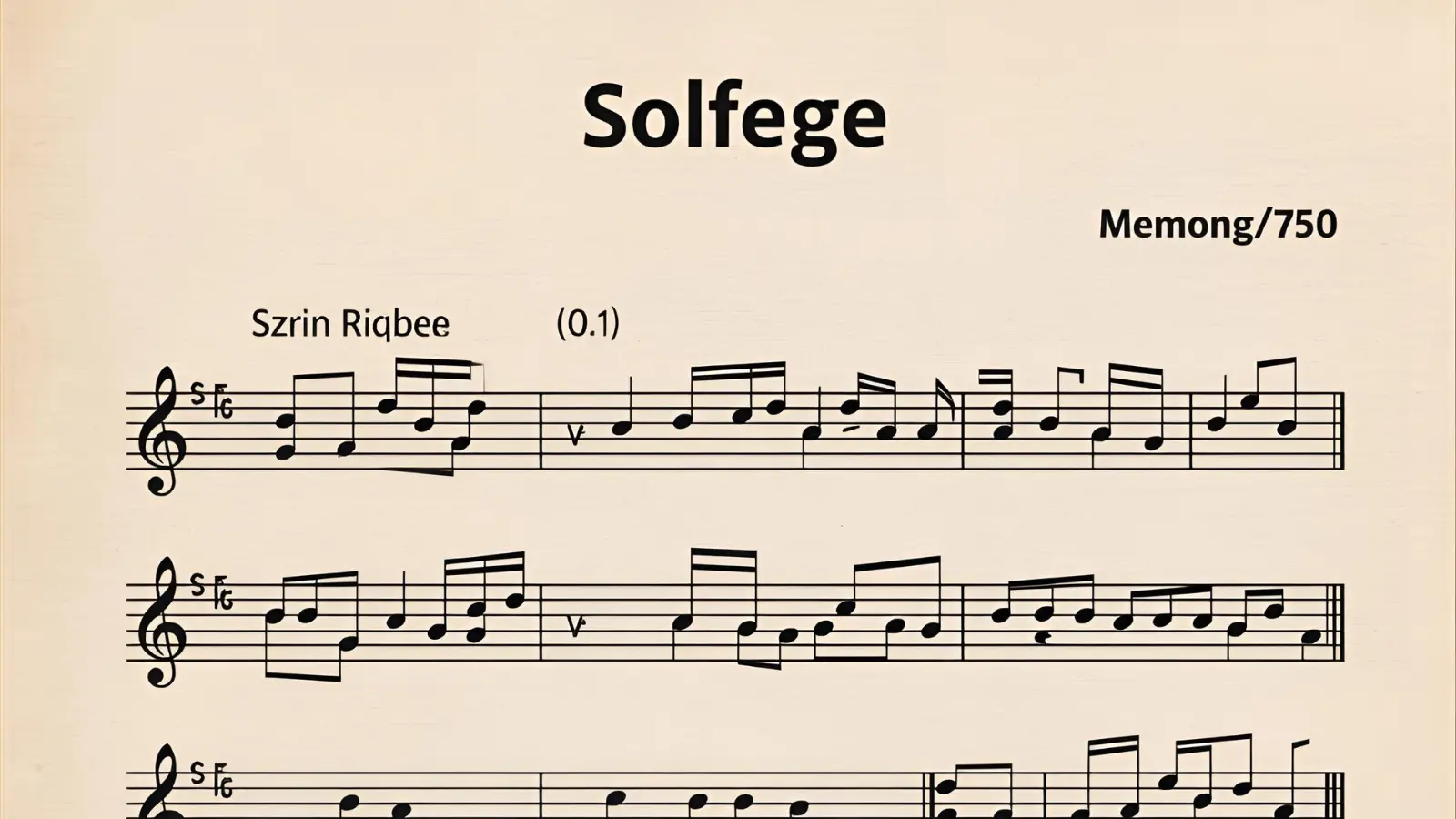
Musicians can literally “look” at a sheet of music and know how it sounds.
✔️ 3. It Strengthens Your Musical Memory
Solfege creates mental “anchors” for melodies, helping you memorize songs faster.
✔️ 4. It Helps With Ear Training
You start recognizing intervals like:
- Do → Re (a step)
- Do → Mi (a skip)
- Mi → Sol (a perfect fourth)
This unlocks a whole new level of musical confidence.
✔️ 5. It Builds Vocal Agility
Running through syllables like Do–Re–Mi–Fa–Mi–Re–Do strengthens your voice.
Practical Solfege Exercises You Can Do Anywhere
Whether you’re getting ready for a performance or just having fun, here are easy exercises:
🎤 1. Basic Scale
Do – Re – Mi – Fa – Sol – La – Ti – Do
Do – Ti – La – Sol – Fa – Mi – Re – Do
🎤 2. Interval Practice
- Do → Mi
- Re → Sol
- Fa → La
This teaches you how melodies “jump.”
🎤 3. Arpeggio Pattern
Do – Mi – Sol – Do
Sol – Mi – Do
🎤 4. Chromatic Solfege (Sharps & Flats)
If you want a challenge:
- Di
- Ri
- Fi
- Si
(Slightly advanced—but fun.)
How Solfege Helps Music Producers & Songwriters
It’s not just for singers.
Producers use solfege to:
- Build stronger chord progressions
- Identify melodies by ear
- Create hooks faster
- Understand harmonic movement
Songwriters rely on solfege to:
- Craft repeating patterns
- Make melodies more emotional
- Add structure to choruses and bridges
When you understand the relationship between Do, Mi, and Sol, writing catchy melodies becomes way easier.
Solfege in Real Life: Fun, Everyday Examples
🎧 1. Movie Themes
The iconic “Jaws” theme uses a repeating pattern similar to Ti → Do.
🎶 2. TikTok Vocal Riffs
Modern runs often follow patterns like:
Mi – Fa – Sol – Fa – Mi – Re – Do
🎤 3. Choir Warm-Ups
Almost every vocal group starts practice with simple solfege scales.
🎮 4. Video Game Music
Game composers use scale structures built from the same pitch relationships you learn through solfege.
Why Gen Z Loves Solfege Again
It’s basically the perfect mix of:
- Aesthetic learning
- Skill-building
- Musical glow-up
- Short, digestible syllables
- Trendy creator-friendly content
Plus, mastering music theory in a simple way makes you feel like you’ve unlocked a cheat code.
Benefits of Learning Solfege (Quick Overview)
💡 Mental Skills
- Better memory
- Pattern recognition
- Stronger focus
🎵 Musical Skills
- Accurate pitch
- Faster learning
- Better improvisation
- Stronger harmonies
🎤 Vocal Skills
- Smooth runs
- Better control
- Easy warm-ups
Common Mistakes Beginners Make
❌ 1. Trying to be perfect too fast
Solfege is a skill—take it step by step.
❌ 2. Forgetting to listen
You can’t improve pitch without careful listening.
❌ 3. Skipping the hand signs
Hand signs reinforce pitch visually and physically.
❌ 4. Only singing “Do-Re-Mi” in order
Real melodies move up and down, skip around, and repeat.
Advanced Solfege Concepts (For When You Level Up)
1. Solfege for Minor Scales
Natural minor, harmonic minor, and melodic minor all have adjusted syllables.
2. Modulation
When a song changes keys, your Do shifts (movable Do), so your brain trains to adapt quickly.
3. Ear Training Through Dictation
Listening to a melody and writing it down using solfege syllables is next-level skill-building.
Real-World Scenario: How Solfege Helps You Sing Better
Imagine someone plays a melody:
Do – Sol – Mi – Re – Do
Even if you don’t see the sheet music, your voice instantly knows the pattern.
That’s how vocalists stay on pitch even in tough harmonies.
FAQ Because You Probably Still Have Questions
1. Is solfege only for singers?
Nope. It’s for producers, instrumentalists, composers, and anyone learning music.
2. Do I need to know music theory first?
Not at all. Solfege is often the first step before theory.
3. Can solfege help with perfect pitch?
It won’t guarantee it, but it massively improves relative pitch.
4. Can kids learn solfege?
Absolutely—most school music programs teach it.
Final Thoughts: Why Solfege Still Matters Today
Solfege isn’t just a traditional music system it’s a powerful skill that unlocks your ability to understand, hear, and create music with confidence.
It strengthens your ear, sharpens your vocal abilities, and helps you connect with melodies in a way that feels natural and intuitive.
In a world where more people are exploring music through apps, online creators, and short-form tutorials, solfege stands as a timeless, beginner-friendly foundation for anyone who wants to improve their musical abilities.
Whether you’re singing your favorite song, producing beats, joining a choir, or simply trying to sound better on TikTok solfege gives you the advantage.