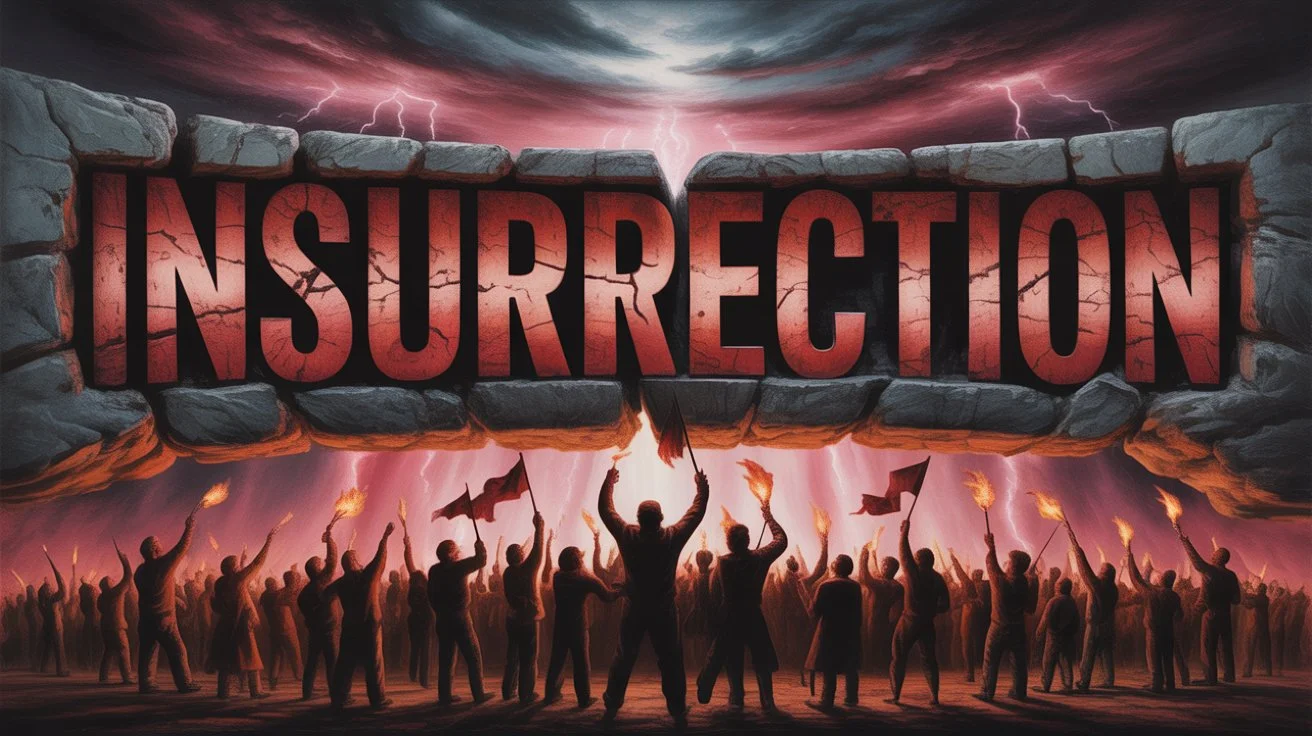
When certain political events trend on social media, one particular word always seems to show up: insurrection.
It pops up in news headlines, historical documentaries, debates, and even meme comment sections.
But despite being widely used, a lot of people still aren’t 100% sure what it truly refers to in a real-world context.
Let’s break it down in the simplest, cleanest, trend-friendly way so you can understand the term instantly — and explain it like a pro the next time it comes up in conversation.
⚡ Quick Answer
Insurrection refers to a violent or aggressive uprising against a government, authority, or established system. It’s when a group attempts to overthrow, challenge, or disrupt the current power structure using force, rebellion, or organized resistance.
Think of it as the extreme version of civil disobedience — the moment when disagreement turns into action meant to topple or challenge those in charge.
🧠 The Real Meaning of “Insurrection” in Simple Terms
At its core, insurrection is all about rising up. But it’s not just protesting, disagreeing, or speaking out. It specifically involves:
- Force or violence
- Organized action
- A goal to disrupt or replace authority
- A group effort, not just a single person acting alone
It’s a serious word because it describes a serious type of event—one that can change governments, reshape nations, and shift history.
🌍 Where the Term Comes From
The word comes from Latin roots meaning “to rise up.” Historically, it was used to describe rebellions, mutinies, or any attempt where people collectively defied those in power.
In modern times, the term is still tied to:
- Political conflict
- Civil unrest
- Revolutionary actions
- Attempts to interfere with governmental systems
It’s more than chaos — it’s purposeful, organized resistance.
💥 What Makes Something an Insurrection?
To count as an insurrection, an event typically includes:
1. A Target:
There’s always a focus — usually a government, ruling body, or official authority.
2. A Goal:
The group wants to change, challenge, or disrupt power structures.
3. Force or Threat:
Unlike peaceful protests, insurrections involve violence, physical action, or forceful attempts.
4. Group Involvement:
This isn’t a lone-wolf situation. It includes coordinated or widespread participation.
5. Intentionality:
It’s not random. It’s planned, purposeful, and often strategic.
🆚 Insurrection vs. Protest vs. Revolution
People mix up these terms all the time — so let’s simplify:
Insurrection
- Violent uprising
- Targets government or authority
- Designed to disrupt or take over
Protest
- Peaceful or nonviolent
- Expresses disagreement
- Doesn’t try to overthrow authority
Revolution
- Successful, large-scale insurrection
- Completely replaces the system
- Long-term political transformation
In short:
An insurrection is more aggressive than a protest, but not always as large or successful as a revolution.
📱 Examples You Might Have Seen Online
To make it even clearer, here are scenarios in everyday language:
Scenario 1:
A large group storms a government building trying to stop an official process.
➡️ This is an insurrection.
Scenario 2:
Students gather on campus with signs and chants demanding better policies.
➡️ This is a protest.
Scenario 3:
A movement successfully removes the existing government and replaces it with a new system.
➡️ This is a revolution.
The difference is action, intention, and impact.
📰 Why the Word Trends So Much
The term spikes in search trends whenever:
- Major political events occur
- There’s debate about government actions
- Civil unrest makes headlines
- People argue about legality and responsibility
- Social media highlights large-scale disruptions
It’s an emotionally charged word, so it grabs attention fast — making it a favorite in news coverage and political discourse.
⚖️ The Legal Side: How Serious Is an Insurrection?
Insurrection isn’t just a dramatic term — it’s a legal term in many countries.
In legal contexts, it can mean:
- Severe criminal charges
- Long prison sentences
- Loss of civil rights
- Being barred from holding office
- Property loss or fines
Governments treat the term seriously because it directly challenges the stability of a nation.
🔍 How Insurrection Is Viewed Around the World
Different countries have different thresholds for what counts as an insurrection. For example:
- In some nations, even organized nonviolent attempts to disrupt government operations qualify.
- In others, only armed uprisings count.
- Some governments use the term politically to label opponents.
- Others use it sparingly, only for significant violent events.
This is why the word can spark debate: not everyone agrees on what falls under the definition.
🎭 Cultural & Social Impact
Insurrections aren’t just political events — they influence:
- Movies and series
- Literature
- Documentaries
- History education
- Social media narratives
You’ll see the concept portrayed in dystopian films, revolutionary stories, and political thrillers. It’s one of those words that instantly sets a dramatic tone.
💡 Why Understanding This Term Matters
We live in a world where news spreads instantly and discussions on governance, power, and justice go viral in seconds. Knowing this term helps you:
- Decode political conversations
- Understand historical events
- Interpret the news accurately
- Recognize the difference between protest and violence
- Participate in online debates with clarity
Language shapes perception — and this particular word carries weight.
🗣️ How People Use the Word in Conversations
Here are some example sentences to show how it works in real life:
- “The event was labeled an insurrection due to the violent attempt to disrupt the government.”
- “Historians still debate whether it was a protest or a full-scale insurrection.”
- “Authorities are investigating who organized the insurrection.”
- “The uprising turned into an insurrection when the crowd stormed the building.”
Notice how the term is almost always used with political or institutional context.
🔥 Synonyms & Related Terms (LSIs for SEO)
These words help expand your understanding and improve SEO relevance:
- Uprising
- Revolt
- Rebellion
- Coup attempt
- Unrest
- Civil disorder
- Government disruption
- Political upheaval
- Mutiny
- Sedition
All of these tie into the same family of concepts but have slight differences in severity or scope.
📚 Real-World Examples From History
Throughout history, regions have seen movements that fall under this category:
- Colonial uprisings against imperial rule
- Armed citizen revolts
- Attempts to seize government institutions
- Military rebellions to topple leaders
- Failed revolutions sparked by political tension
These events often leave long-lasting marks on culture, borders, and national identity.
🤝 What Causes Insurrections?
They don’t happen randomly. Common triggers include:
- Political dissatisfaction
- Economic crises
- Social injustice
- Loss of trust in leadership
- Inequality
- Disputes over power transitions
- External political influence
When pressure builds without an outlet, a group may escalate from protest to revolt.
🧩 Why Some Insurrections Fail (and Others Don’t)
Success often depends on:
- Organization level
- Public support
- Military response
- Available resources
- Timing
- Leadership
- Government resilience
📝 Conclusion
Insurrection is one of those heavy, high-impact terms that gets tossed around during major political moments.
But now you know exactly what it means, how it works, what separates it from protests and revolutions, and why the concept matters so much in society.
Being informed isn’t just smart — it’s empowering. Now you can break it down clearly, confidently, and accurately whenever the topic pops up.