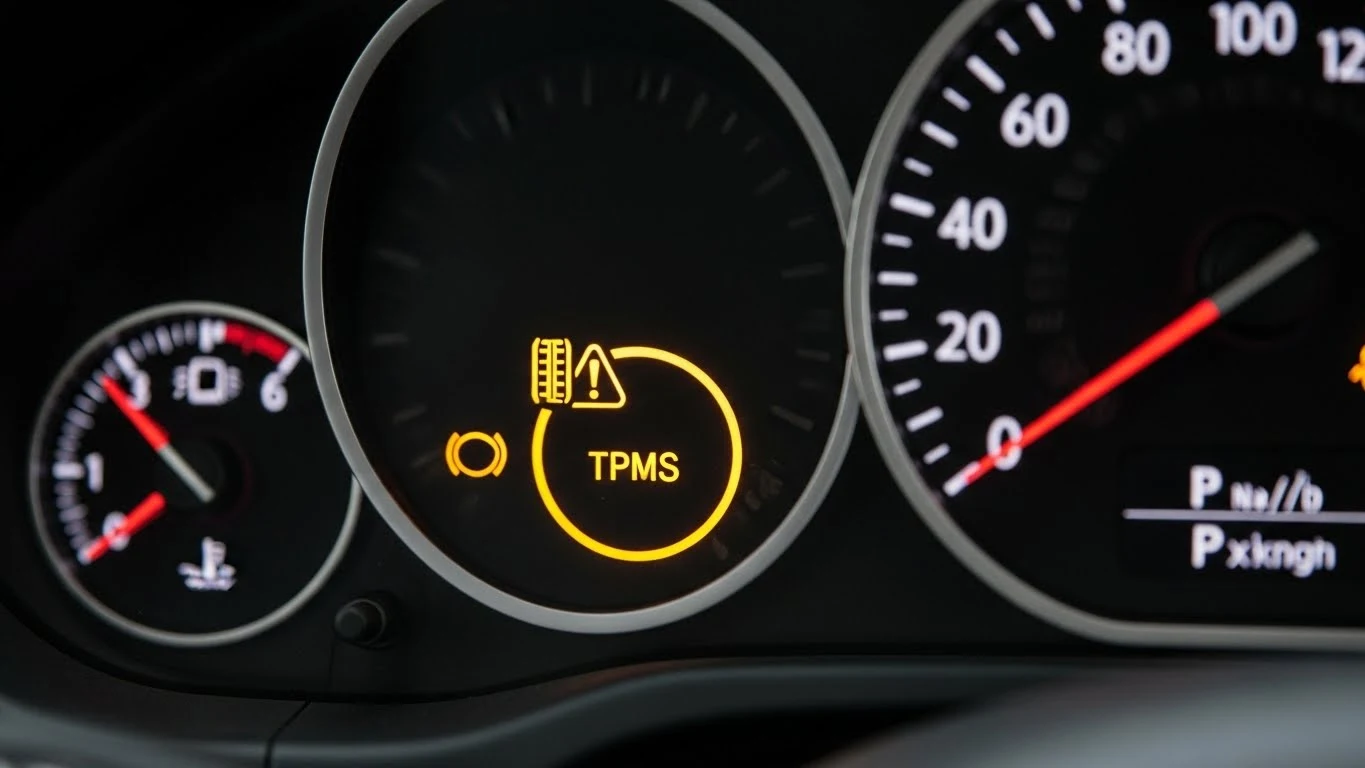
If you’ve ever started your car and noticed a small horseshoe-shaped light with an exclamation mark, you’re not alone.
That little icon pops up at the most random times—on cold mornings, long road trips, or right when you’re already late.
It’s one of the most searched car questions online, and people everywhere are asking what does tpms mean on a car and whether it’s serious or just another annoying alert.
Spoiler: it matters more than you think.
Let’s break it down in a simple, no-stress, Gen-Z-friendly way so you actually know what your car is trying to tell you.
⚡ Quick Answer
TPMS stands for Tire Pressure Monitoring System.
It’s a built-in safety feature that checks the air pressure inside your tires and warns you when one or more tires are underinflated (or sometimes overinflated). Low tire pressure can affect safety, fuel economy, and tire life—so this light is basically your car saying, “Hey, check your tires before things get sketchy.”
🛞 What Is TPMS and Why Cars Have It
TPMS is a smart system designed to monitor the air pressure in your tires while you drive. If the pressure drops below a safe level, a warning light appears on your dashboard.
This system became mandatory in many countries after studies showed that underinflated tires were a major cause of accidents, blowouts, and poor vehicle control.
Why manufacturers added it:
- Improves road safety
- Reduces tire blowouts
- Helps maintain better fuel efficiency
- Extends tire lifespan
In short, TPMS exists to protect you, your car, and everyone else on the road.
🚨 What the TPMS Warning Light Looks Like
The TPMS icon usually looks like:
- A flat tire shape
- An exclamation point (!) inside
Sometimes it lights up solid. Other times it flashes.
Solid light usually means:
- One or more tires have low air pressure
Flashing light usually means:
- A system error
- A faulty sensor
- The TPMS needs servicing
Either way, it’s not something to ignore.
🔍 How TPMS Actually Works
There are two main types of tire pressure monitoring systems.
1️⃣ Direct TPMS
This system uses physical sensors inside each tire.
- Measures air pressure in real time
- Sends data directly to your car’s computer
- More accurate
- Slightly more expensive to repair
2️⃣ Indirect TPMS
This system works through wheel speed sensors (the same ones used for ABS).
- Detects pressure loss by comparing tire rotation speeds
- Less precise
- Cheaper and easier to maintain
Both systems do the same job—just in different ways.
❄️ Why the TPMS Light Turns On Randomly
Ever noticed the light comes on during winter or early mornings? That’s not a coincidence.
Common reasons include:
- Cold weather (air pressure drops when temperatures fall)
- Natural air loss over time
- Punctures or slow leaks
- After tire rotation or replacement
- Overinflation
Even a small pressure change can trigger the alert.
🧠 What Happens If You Ignore the Warning?
Ignoring the TPMS light is like ignoring a “low battery” warning on your phone—except the consequences are way worse.
Risks of driving with low tire pressure:
- Poor steering control
- Longer braking distance
- Uneven tire wear
- Reduced gas mileage
- Increased chance of tire failure
Underinflated tires = unsafe driving.
That tiny light could save you from a big accident.
🛠️ How to Fix a TPMS Warning Light
Fixing it is usually easier than people think.
Step-by-step:
- Check tire pressure using a gauge
- Inflate tires to the recommended PSI (found on the driver-side door sticker)
- Drive for a few minutes
- See if the light turns off automatically
If it stays on, you may need to:
- Reset the system manually
- Drive at highway speed for recalibration
- Visit a tire shop to check sensors
🔁 How to Reset the TPMS (General Guide)
Not all cars reset the same way, but common methods include:
- Holding the TPMS reset button under the dashboard
- Using the vehicle’s infotainment menu
- Driving at 50+ mph for 10–20 minutes
- Disconnecting and reconnecting the battery (not always recommended)
Always check your owner’s manual for exact instructions.
🧩 TPMS vs Regular Tire Checks
Even with modern systems, TPMS is not a replacement for manual tire checks.
Important to know:
- It doesn’t tell you exact pressure (in most cars)
- It may not detect gradual pressure loss immediately
- It won’t warn you about tire damage or alignment issues
Best practice:
Check your tires manually once a month.
💸 Does TPMS Affect Fuel Economy?
Yes—big time.
Low tire pressure increases rolling resistance, which makes your engine work harder.
Benefits of proper pressure:
- Better mileage
- Smoother ride
- Lower fuel costs
- Reduced emissions
So keeping your tires properly inflated helps both your wallet and the planet 🌍.
🧪 Real-Life Scenarios You’ll Relate To
Scenario 1:
You fill gas, drive off, and suddenly the warning light pops up.
➡️ Most likely a temperature change triggered it.
Scenario 2:
The light flashes for a minute, then stays on.
➡️ Possible sensor issue.
Scenario 3:
Light turns on after getting new tires.
➡️ TPMS wasn’t recalibrated.
Each situation has a fix—but ignoring it is never the move.
🚙 Is It Safe to Drive With the TPMS Light On?
Short answer: Only for a short distance.
You can drive to:
- A gas station
- Tire shop
- Safe parking area
But you shouldn’t:
- Go on long trips
- Drive at high speeds
- Carry heavy loads
Think of it as a warning, not a suggestion.
🧠 Why TPMS Is Actually a Smart Feature
Some drivers find it annoying, but TPMS is one of those systems that quietly saves lives.
It helps by:
- Catching problems early
- Preventing blowouts
- Improving handling
- Promoting safer driving habits
Once you understand it, the light becomes helpful—not stressful.
🏁 Final Thoughts
That small dashboard symbol isn’t just another tech feature—it’s your car looking out for you. Understanding how tire pressure monitoring works gives you more control, better safety, and fewer surprises on the road.
Next time the light comes on, you won’t panic.
You’ll know exactly what to do.
Drive smart. Stay safe. And keep those tires happy.