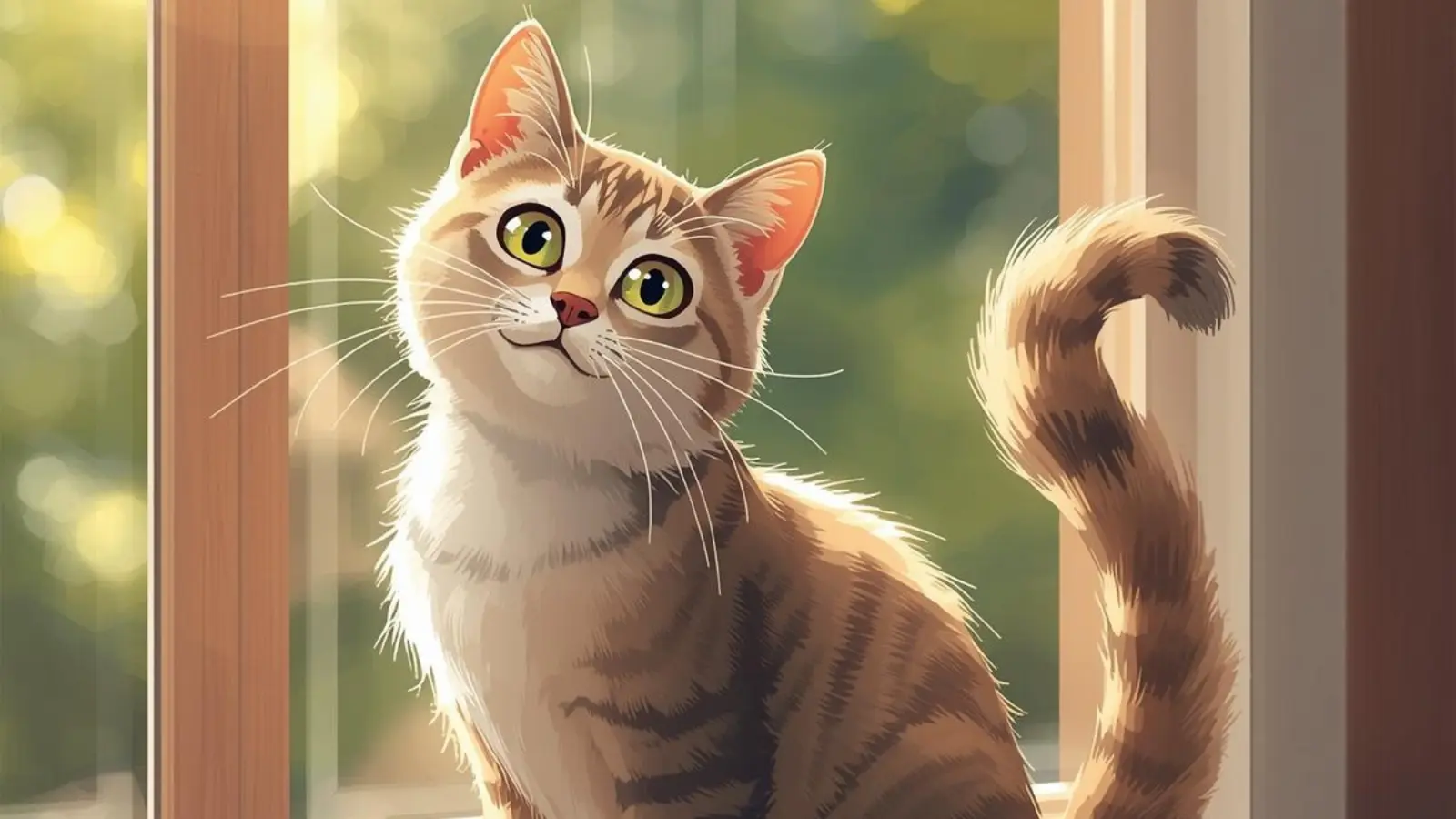
Cats are mysterious creatures, and their tail movements often leave humans puzzled.
Recently, many cat owners and animal lovers have been searching online to understand what it means when a cat wags its tail, especially as more people share videos of their cats’ quirky tail behaviors on TikTok and Instagram.
Understanding this behavior can help you better communicate with your furry friend and avoid misreading their signals.
Quickly put, when a cat wags its tail, it’s a form of communication showing emotion—ranging from happiness to irritation.
⚡ Quick Answer
A cat wagging its tail usually indicates its mood or feelings. Slow, gentle swishes can mean curiosity or contentment, while fast, flicking movements often signal agitation or annoyance.
🐾 Understanding Tail Wagging in Different Contexts
In Texting and Messaging
While cats don’t text, people often use cat emojis or phrases about tail wagging to express their own emotions in chats. For example:
- “Feeling a bit 🐱 waggy today” – could mean playful or curious.
- “He’s wagging his tail 😾” – may signal irritation or teasing.
In texting, referencing a wagging cat tail often reflects mood or emotional state, borrowed from feline behavior.
In Love and Relationships
In a romantic context, cat tail references are sometimes used metaphorically:
- A slow wag or flick could symbolize curiosity or interest in someone.
- A fast, irritated tail might hint at frustration or boundaries.
It’s a playful way to express subtle feelings without being direct.
In Slang and Casual Language
Some casual slang borrows cat behaviors to describe human emotions:
| Term | Meaning |
| Cat wag | Feeling playful, cautious, or slightly irritated |
| Tail flick | Minor annoyance or flirtation |
| Purring wag | Contentment, happiness, or satisfaction |
Slang use often depends on context, and not everyone interprets it literally.
On Social Media Platforms
On TikTok, Instagram, and Snapchat, cat videos are extremely popular. Tail movements are highlighted to grab attention or express humor. Examples:
- A cat swishing tail while staring at a toy – caption: “Plotting my next move 😼”
- Rapid tail flicks – caption: “When someone eats your food 😾”
Creators often use tail wagging as a visual cue for mood or emotion, making videos relatable.
Spiritual or Symbolic Meaning
Some cultures interpret cats and their tail movements as spiritual signals:
- A calm, upright tail can represent confidence and protection.
- A fast-flicking tail may symbolize alertness or warning.
In spiritual symbolism, cats often represent intuition and independence, and tail movements are considered extensions of these traits.
Numerology or Cultural Meaning
In certain cultures, cats and their behavior carry good luck or omens:
- In Japan, a cat with a straight tail symbolizes prosperity.
- In Egyptian culture, tail movements were linked to mood and divine protection.
Though modern interpretations are more playful than mystical, tail wagging still has cultural significance in storytelling and folklore.
🧠 Examples & Usage
- Text Example: “Feeling 🐱 waggy today, so let’s hang out!” – implies playfulness.
- Social Media Caption: “When the cat is eyeing the new toy… #TailMood” – shows curiosity.
- Real-Life Observation: A cat’s slow, gentle tail swish while being petted signals contentment.
- Fast Flicking Tail: Avoid petting; it usually means irritation.
Understanding context is key: the same tail movement can mean happiness in one situation and annoyance in another.
❓ Common Questions About Cat Tail Wagging
Q1: What does it really mean when a cat wags its tail?
A: It shows the cat’s emotional state—curiosity, excitement, irritation, or playfulness.
Q2: Is tail wagging positive or negative?
A: It depends on speed and movement. Slow swishes are positive; rapid flicks often indicate irritation.
Q3: Is it romantic?
A: Metaphorically in human communication, yes—it can hint at interest or curiosity.
Q4: How should someone reply to a cat wagging tail?
A: Observe the cat’s mood. For slow swishes, pet gently. For rapid flicks, give space.
🏁 Conclusion
Now you know that when a cat wags its tail, it’s communicating emotions, not just randomly moving.
Whether in real life, texts, or social media, tail wagging reflects curiosity, playfulness, irritation, or interest.
By observing the speed and pattern of the wag, you can understand your cat—or the metaphorical meaning—more accurately.

